

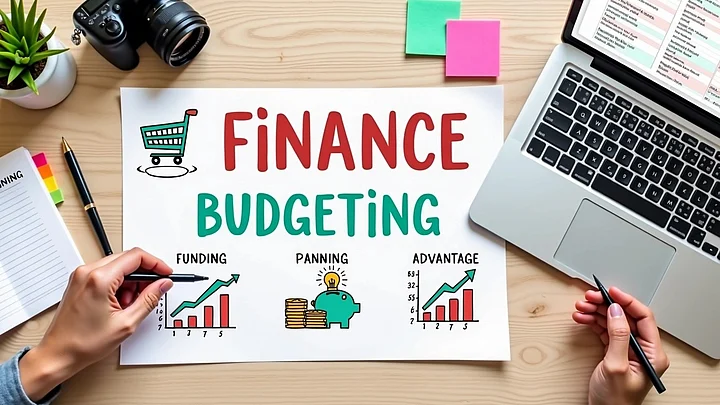
Creating a personal budget is one of the most effective ways to take control of your financial future, yet it remains one of the most abandoned habits for many individuals. The common perception of a budget is that of a restrictive cage, a set of rules designed to limit your happiness and spontaneity. In reality, a budget is simply a tool that provides you with the freedom to spend your money on the things that truly matter to you. When you stop wondering where your money went at the end of every month and instead start telling your money where to go, your financial stress begins to dissipate. Building a budget you can actually stick to requires shifting your mindset from restriction to prioritization.
Analyze Your Current Spending Habits
Before you can create a plan, you must have an accurate picture of your current financial reality. Most people have a vague idea of their monthly income but a wildly inaccurate perception of their spending. To build a sustainable budget, you need hard data. For the next thirty days, track every single penny you spend. This includes major bills like rent and utilities, as well as the seemingly insignificant purchases like morning coffee, parking fees, or small digital subscriptions.
You can use a spreadsheet, a dedicated budgeting application, or even a simple notebook. The method is less important than the consistency of the tracking. Once the month is over, categorize these expenses into two primary groups: fixed and variable. Fixed expenses are those that remain relatively constant, such as housing, insurance, and loan payments. Variable expenses include groceries, entertainment, dining out, and personal care. Seeing your spending itemized by category will likely reveal patterns you did not realize existed. This data is the foundation upon which your sustainable budget will be built, as you cannot optimize what you do not measure.
Define Your Financial Goals
A budget without a clear purpose is rarely followed. If you are tracking expenses just for the sake of being organized, you will likely lose interest within a few weeks. To maintain motivation, you need to connect your budget to tangible objectives. Start by identifying what you want your money to accomplish. Your goals should be categorized by timeframes to make them feel more manageable.
-
Short-term goals: These could include creating a starter emergency fund of one thousand dollars or paying off a specific credit card balance.
-
Medium-term goals: Think about saving for a down payment on a home, a major vacation, or professional development certifications.
-
Long-term goals: These are the pillars of your financial security, such as retirement contributions, child education funds, or becoming entirely debt-free.
When you have a specific reason to save, saying no to an impulse purchase becomes an act of moving toward your goal rather than an act of deprivation. Every dollar you choose not to spend on an unnecessary item is a dollar that brings you closer to your vision of financial independence.
Choose a Budgeting Method That Fits Your Personality
Not all budgeting styles work for every person. If you choose a method that feels cumbersome or confusing, you will inevitably stop doing it. Explore a few popular structures to see what resonates with your lifestyle.
The fifty-thirty-twenty rule is a popular starting point for many. It suggests allocating fifty percent of your net income toward needs, thirty percent toward wants, and twenty percent toward savings and debt repayment. This framework is simple to understand and provides a clear balance between enjoying your current life and investing in your future.
If you are a more detail-oriented person, you might prefer zero-based budgeting. In this system, you assign every single dollar a job before the month begins. By the time you reach the end of your budgeting process, your income minus your expenses should equal zero. This method is highly effective for those who want to be hyper-intentional with their resources and minimize wasteful spending.
For those who find manual tracking overwhelming, a simplified bucket system can work wonders. In this approach, you divide your income into broad categories—often referred to as buckets—such as housing, food, transportation, and discretionary spending. Once the money in a specific bucket is gone for the month, you stop spending in that category. This removes the need for granular tracking while still enforcing healthy limits.
Emphasize Automation and Consistency
The biggest enemy of a long-term budget is human error and the temptation to bypass the plan when life gets busy. To combat this, automate as much of your financial life as possible. Set up automatic transfers to your savings and investment accounts to occur on the same day you receive your paycheck. When your savings are treated like a mandatory bill, you adapt your spending to the remaining balance.
Automation also applies to bill payments. By scheduling your fixed expenses to be paid automatically, you avoid late fees and the mental energy required to remember due dates. The less you have to actively manage your money, the more likely you are to stay on track. Once the system is running, your primary task is simply to monitor your progress and make minor adjustments rather than rebuilding your entire financial strategy every month.
Address Lifestyle Creep and Impulse Spending
Lifestyle creep is the silent budget killer. As your income increases, your spending often rises to match it, meaning your savings rate stays the same regardless of how much you earn. To build a budget that sticks, you must consciously choose to keep your living expenses stable even when your income grows. This allows you to aggressively increase your savings and debt repayment capacity, significantly shortening the time it takes to reach your goals.
To curb impulse spending, implement a waiting period. If you find yourself wanting to make a non-essential purchase over a certain dollar amount, commit to waiting forty-eight hours before buying it. Often, the initial emotional urge will fade, and you will realize the item is not a priority. This simple cooling-off period provides the space needed to make logical decisions rather than emotional ones.
Audit and Adjust Regularly
A budget is a living document, not a rigid set of instructions etched in stone. Your life circumstances will change, and your budget must change with them. Conduct a brief monthly review to see if your actual spending aligns with your projections. If you find that you are consistently overspending in a specific category, do not assume you have failed. Instead, ask why. Perhaps your initial allocation was unrealistic, or perhaps your lifestyle needs have changed.
Adjust your budget categories to reflect your reality, but ensure that your core savings and debt repayment goals remain prioritized. Learning to adjust is part of the process, not a sign of defeat. By staying flexible, you ensure that your budget remains a helpful companion throughout your financial journey rather than a source of frustration.
Frequently Asked Questions
What should I do if an emergency forces me to break my budget?
If an unexpected expense arises, use your emergency fund if one is available. If not, treat the situation as an unplanned event, not a failure of your entire system. Prioritize the essential expense, and then adjust your budget in the following months to slowly replenish your savings or address the shortfall without guilt.
How can I make budgeting feel less like a chore?
Focus on the benefits rather than the mechanics. Regularly review your progress toward your biggest goals, and celebrate milestones, no matter how small. When you see your debt shrinking or your savings growing, the effort required to update your budget becomes much more rewarding.
Should my partner and I have a joint or separate budget?
There is no single correct answer, but transparency is key. Some couples find success with a hybrid approach: a joint account for shared household expenses and individual accounts for personal discretionary spending. The most important factor is open communication about financial goals and expectations.
Is it necessary to track every single penny?
While precision helps, it is not strictly required if it makes you quit. If tracking every coffee is too much, try tracking only the major categories for a while. The goal is to gain awareness, so use the level of detail that you can consistently maintain over the long term.
How do I handle variable income when budgeting?
If your income fluctuates, budget based on your lowest expected monthly income rather than your highest. Any additional income earned in better months can then be directed toward your savings goals or debt reduction, which creates a buffer for the months when income is tighter.
Can I include fun money in my budget?
Absolutely. A budget that ignores your need for entertainment and relaxation is one you will eventually abandon. Always include a dedicated line item for fun money, guilt-free spending, or personal hobbies. This makes the plan sustainable and realistic for your human needs.
What is the biggest mistake people make when creating their first budget?
The most common error is being overly optimistic about expenses and overly ambitious about savings. Many people build a perfect, bare-bones budget that does not account for the realities of daily life. Starting with a realistic, slightly flexible budget is far better than a perfect one that you cannot follow for more than a month.
