

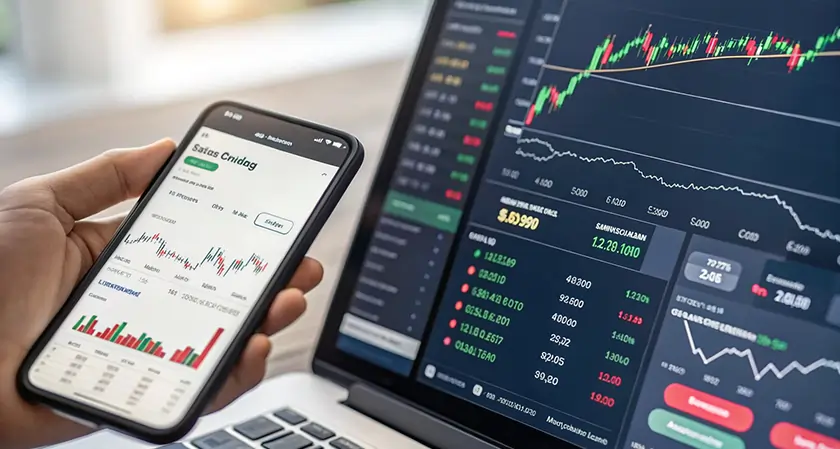
The transformation of the financial brokerage industry over the past several decades represents one of the most significant shifts in the history of individual wealth management. Once the exclusive domain of high-net-worth individuals and institutional players, stock market participation has been democratized by the rapid advancement of digital platforms. This evolution from the telephone-based, human-broker model to the current era of instantaneous, algorithm-driven trading has not only reduced costs for the average investor but has fundamentally changed the relationship between the public and the capital markets.
The Era of the Human Intermediary
To understand the current state of online brokerage, one must look back at the era dominated by full-service brokers. For most of the twentieth century, if an individual wanted to buy shares of a company, they had to call a broker, discuss the investment, and pay a substantial commission for the privilege of executing that trade. These brokers were more than just order executors; they were personal advisors, tax planners, and relationship managers. While this model provided high-touch service, it came at a high cost, often limiting stock market access to those with significant capital.
The fee structure of that era—often charging high percentage-based commissions on every transaction—meant that small-scale investing was largely inefficient. A person with only a few hundred dollars to invest could see a large portion of their capital disappear into transaction fees. This barrier to entry created a market that largely excluded the middle class, reinforcing a gap between those who understood the markets and those who were effectively barred from them.
The Discount Revolution and the Rise of the Personal Computer
The first major disruption began in the 1970s and 80s with the rise of discount brokerages. By stripping away the advisory services and focusing strictly on trade execution, these firms introduced a model that drastically undercut the commissions of full-service firms. However, these trades still often required phone calls or, in later years, clunky proprietary software that required complex installation.
As the personal computer became a household staple in the 1990s, the potential for digital interaction with financial markets began to materialize. Early web-based platforms emerged, allowing investors to place orders through a browser interface. While these systems were slow and rudimentary by modern standards, they were revolutionary. For the first time, an individual could look at a price quote and place a buy or sell order without speaking to a human being. This era marked the beginning of true financial autonomy, as investors gained the ability to research and execute trades on their own timelines.
The Mobile Transition and Democratization
The mid-2000s and the subsequent rise of mobile technology accelerated the evolution of brokerage platforms from desktop-centric utilities to omnipresent financial hubs. As internet speeds increased and mobile devices became more powerful, the barriers to accessing financial information fell away. The shift toward mobile-first development meant that an investor could manage their portfolio from a subway commute, a coffee shop, or their living room.
This period also saw the introduction of disruptive pricing models, most notably the elimination of trading commissions. By removing the cost of entry, brokerages shifted the focus of their business models toward interest income on cash balances, order flow payment, and premium subscription features. This transition effectively eliminated the cost hurdle for small-scale investors, enabling people to start building diversified portfolios with amounts as small as the price of a single share, or even fractions of a share. The market had moved from being an exclusive club to a utility accessible to anyone with a smartphone and a modest amount of savings.
http://googleusercontent.com/image_collection/image_retrieval/7123985149301140927_0
The Integration of Data and Artificial Intelligence
In the modern landscape, brokerage platforms have evolved far beyond mere order-entry screens. Today, a premier online brokerage platform acts as an integrated financial ecosystem. Investors now expect real-time data, sophisticated charting tools, and AI-driven analytics that were once available only to professional hedge fund managers.
The current platforms utilize machine learning to provide users with personalized insights, risk assessment tools, and automated notifications based on their specific portfolio holdings. Integration with other financial services—such as tax reporting software, automated portfolio rebalancing, and crypto-asset management—has created a seamless user experience. The goal is no longer just to facilitate a trade, but to provide a comprehensive management layer for an individual’s entire financial life.
-
Algorithmic Trading: Many modern platforms provide tools for automated, strategy-based investing.
-
Fractional Shares: Investors can now buy small pieces of high-priced stocks, allowing for better diversification regardless of account size.
-
Educational Ecosystems: Brokerages now serve as content hubs, offering webinars, video courses, and interactive lessons that educate users as they invest.
-
Social Trading: Certain platforms have introduced social features that allow users to view community sentiments, follow successful investors, or engage in discussions about market trends.
Challenges and Future Trends
Despite the incredible progress, the evolution of brokerage platforms has introduced new challenges, particularly regarding investor behavior. The ease of access and the gamification of trading interfaces have led to concerns about short-term speculative behavior. Platforms must now balance the need for ease-of-use with the responsibility of ensuring that users are informed of the risks associated with high-volatility trading.
The next phase of this evolution will likely involve further integration of decentralized finance, improved biometric security, and more advanced predictive modeling. As the world moves toward an even more integrated digital economy, the brokerage platform of the future will likely look less like a standalone application and more like an invisible layer of functionality that powers our daily financial interactions. The trend is clearly moving toward a frictionless environment where investing is a background process rather than a laborious task.
Frequently Asked Questions
How have commission-free trades changed the market?
Commission-free trading has significantly lowered the barrier to entry, allowing investors to trade more frequently and with smaller amounts of capital. This change has democratized the market but also shifted broker revenue models toward interest income and payment for order flow, which can sometimes create hidden costs for the investor in terms of trade execution quality.
What is meant by the term gamification in trading apps?
Gamification refers to the use of design elements—such as colorful charts, confetti animations, notifications, and leaderboard-style features—typically found in mobile games. The intention is to make the user experience more engaging, but critics argue it can encourage impulsive or addictive trading behaviors rather than thoughtful, long-term investing.
How do modern brokerage platforms ensure my data is secure?
Leading platforms employ advanced security protocols, including multi-factor authentication, end-to-end encryption, and biometric login features. They also undergo rigorous third-party security audits and provide insurance on account assets through organizations like the Securities Investor Protection Corporation, which protects against the failure of the brokerage firm itself.
Will AI replace human financial advisors entirely?
It is unlikely that AI will entirely replace humans, as complex financial situations often require the empathy, context, and nuanced judgment that only a human advisor can provide. However, AI is rapidly becoming a standard tool for advisors, helping them process data, identify tax-efficient strategies, and manage routine tasks more effectively.
What is payment for order flow?
Payment for order flow is a practice where brokers route their customers’ trade orders to specific market makers. These market makers pay the broker a small fee for the right to execute those trades. While this model is what allows many brokers to offer zero-commission trading, it is a point of debate regarding whether it leads to the best possible execution prices for the individual investor.
Are mobile trading apps as reliable as desktop platforms?
Most modern mobile applications are extremely capable and offer the vast majority of functions found on desktop platforms. For high-volume traders requiring complex charting and multi-monitor setups, desktop applications are still preferred, but for the average investor, mobile apps are now the primary and often more convenient interface for managing a portfolio.
How has the role of the individual investor changed?
The individual investor has moved from a passive participant who relied on human advisors for every decision to an empowered actor who has direct access to professional-grade data, tools, and the ability to execute complex strategies independently. This shift has placed more responsibility on the individual to educate themselves, as the burden of research and risk management has largely shifted from the professional advisor to the investor.
